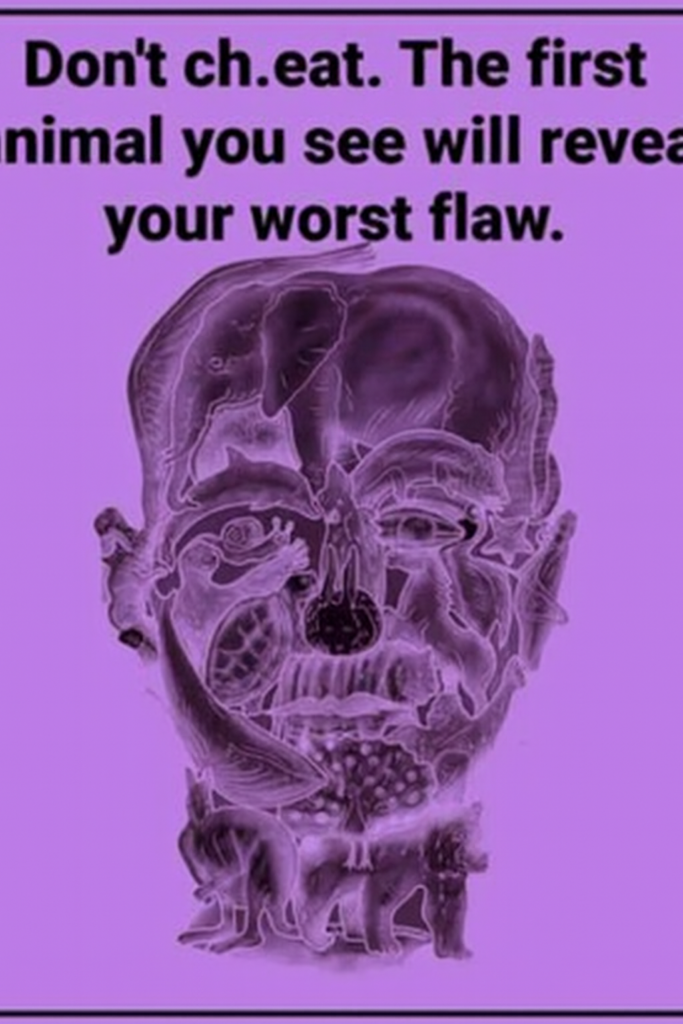
A curious image has been making waves across social media platforms, sparking heated debates, playful arguments, and a fair amount of self-reflection. At first glance, it appears to be a simple drawing of a human face—but upon closer inspection, hidden within the lines are a variety of animals cleverly tucked into the composition. The challenge is straightforward: take a quick glance at the picture, identify the first animal you see, and discover what it says about your biggest personality flaw.
Sounds simple, right? That’s part of the charm.
While these types of visual personality tests don’t hold any scientific merit, they’ve gained massive popularity for being entertaining, accessible, and just insightful enough to get people thinking. Whether shared among friends, reposted on Instagram stories, or used as a quirky icebreaker at a party, this particular illusion is reigniting interest in the world of visual perception tests and pseudo-psychology.
How the Test Works
Participants are instructed to briefly glance at the image without overthinking and note the first animal they naturally recognize. The animal you spot first is said to reflect a dominant (and often unflattering) trait in your personality—your “worst flaw.” The fun lies in the immediacy and spontaneity: no overanalyzing, just a quick reaction that supposedly reveals something hidden about you.
Of course, these interpretations are entirely subjective and created for entertainment. But the descriptions are surprisingly specific and sometimes eerily accurate—or at least, relatable enough to spark a “wait, that’s so me” reaction.
The Animals and What They Allegedly Mean
The image reportedly contains over a dozen animals, each symbolizing a unique personality trait, often framed as a flaw or weakness. Here are some of the commonly included animals and the meanings attributed to them:
- Elephant – Stubbornness: You dig in your heels and resist change, often finding it hard to admit when you’re wrong.
- Iguana – Emotional aloofness: You tend to detach emotionally, appearing cool or distant even when people are reaching out.
- Pig – Indulgence: Whether it’s food, comfort, or luxury, you can be a bit too fond of life’s pleasures and find it hard to moderate.
- Cricket – Anxiety: You overthink and worry easily, often dwelling on possibilities rather than realities.
- Horse – Pride: You value your independence and image, sometimes to the point of appearing arrogant or hard to reach.
- Dolphin – Impulsiveness: You act on instinct and emotion, which can lead to fun moments—but also frequent regrets.
- Bear – Rigidity: You follow your routine and expectations so strictly that flexibility becomes a challenge.
- Fox – Avoidance: You’re clever at escaping confrontation or emotional intensity, even when it’s necessary.
Additional animals from some versions of the image add more layers to the interpretation:
- Rabbit – Insecurity: Beneath a cheerful or calm surface, you often struggle with self-doubt.
- Toucan – Attention-seeking: You thrive on being noticed and sometimes go out of your way to stay in the spotlight.
- Kangaroo – Inconsistency: You jump between tasks, ideas, or commitments, making it hard for others to rely on you.
- Peacock – Vanity: Image is everything—you’re confident and expressive, but sometimes overly concerned with how others see you.
- Turtle – Caution: You move slowly, think carefully, and sometimes let life pass by while you weigh every detail.
- Whale – Emotional isolation: You feel things deeply, but often keep it bottled up where no one can reach.
- Gorilla – Dominance: You’re protective and strong, but can come across as controlling or overbearing.
- Duck – Mood swings: Calm one moment, irritable the next—you’re emotionally unpredictable.
- Starfish – Escapism: You avoid discomfort, preferring fantasy or distraction to confrontation.
- Snake – Manipulation: Strategic and perceptive, you’re not afraid to use influence to get your way.
- Sloth Bear – Procrastination: You delay decisions or responsibilities until they’re unavoidable.
- Bird – Instability: Your thoughts and emotions may flit from one thing to another, making you hard to pin down.
- Snail – Resistance to change: You prefer the familiar, and even small shifts can throw you off balance.
Why These Tests Go Viral
Despite their lack of scientific grounding, visual personality tests like this one continue to gain traction for several reasons:
- Simplicity: They don’t require long questionnaires or analysis. A glance and a reaction are all it takes.
- Relatability: The traits described are vague enough to apply to many people, but specific enough to feel personalized.
- Conversation starters: These tests are designed to be shared. Whether in group chats, social feeds, or dinner tables, they get people talking.
- Reflection (or deflection): They invite light-hearted introspection or allow for playful denial—“That’s not me!”—which is entertaining either way.
They also capitalize on our natural curiosity: What does my brain choose to see first? What does that say about me? Even if we know the answers are made up, we’re still drawn in by the idea that our minds might be revealing something just beneath the surface.
A Light-Hearted Lens on Personality
At their best, these kinds of illusions and tests encourage self-awareness—or at least, a good laugh. They might prompt you to think, Am I really that stubborn? Do I avoid hard conversations more than I’d like to admit? And even if you brush it off as silly internet fun, you may carry that question with you for a while—and that’s the quiet magic of it.
Of course, true personality is far too complex to be distilled into a single image or animal. Who we are is shaped by years of experiences, values, and relationships—not just optical illusions. But sometimes, a tiny moment of surprise or laughter can lead to larger conversations about identity, growth, and how others perceive us.
So the next time you see one of these “first animal you see” tests online, take a second to join in. Let yourself wonder, laugh, reflect, or even disagree. Because whether it sparks introspection or just an emoji-filled group chat, it’s one more way we connect—with ourselves and each other—in a world that always has room for a little more light-hearted fun.