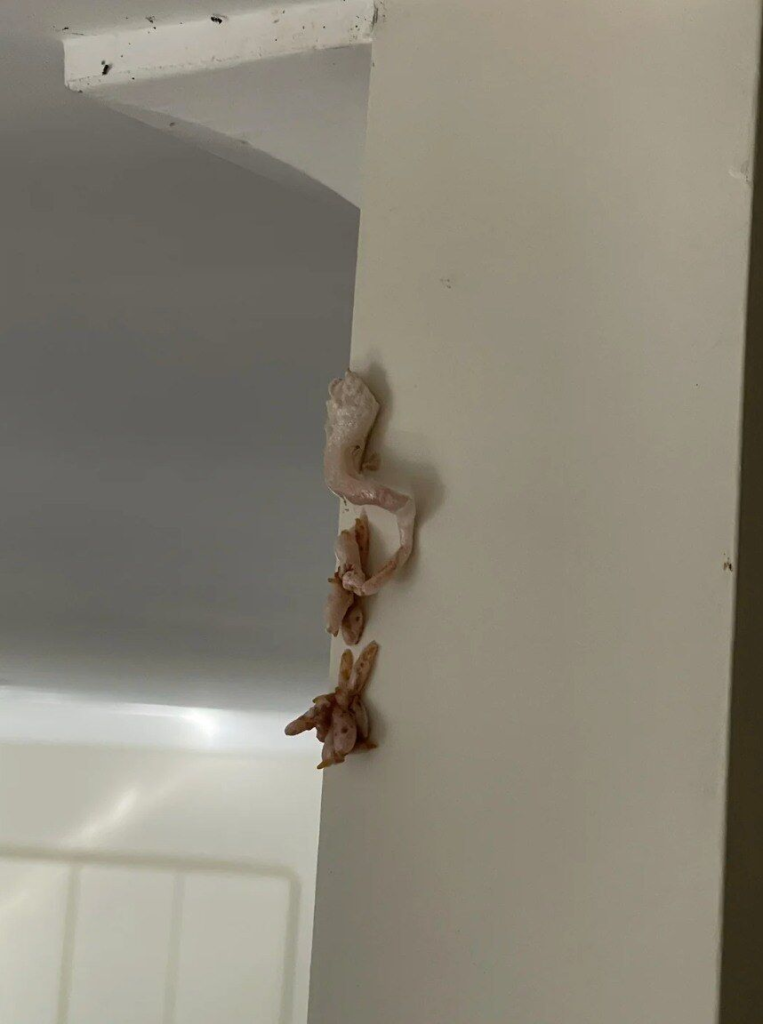
There is comfort in believing we know our homes well—the familiar corners, the steady routines, the small details we stop noticing over time. Yet homes are not fixed or unchanging. Materials shift, age, and react quietly to their environment. That became clear one morning when I noticed a small pink, crust-like patch on the wall. It wasn’t large, but it stood out sharply against the paint, creating an unexpected sense of unease simply because it didn’t belong.
The issue was addressed quickly. My landlord wiped it away with a disinfectant cloth and explained it was likely residue from old sealing material. The wall looked normal again within seconds. Still, something about how easily it disappeared felt unsettling. The material had been firm and brittle, producing a noticeable crunch when removed. It didn’t behave like dust or peeling paint, which made me wonder how long it had been forming unnoticed.
There are reasonable explanations. Aging insulation can expand, old repairs can resurface, or moisture can interact with building materials in surprising ways. Walls often conceal layers of history, and not everything that appears unusual signals a problem. Even so, uncertainty tends to linger when there is no clear answer.
After that day, I became more attentive to my surroundings. Smooth walls now feel less like guarantees and more like surfaces shaped by time. The experience wasn’t alarming, but instructive. When something unfamiliar appears at home, it’s worth pausing to observe and ask questions. Awareness, rather than worry, helps maintain both a living space and peace of mind.